
New Product Launch | Core Vision Microelectronics Introduces High-Performance 3D ToF Depth Sensor
2/17/2023

The VI4331’s specialized chip design significantly enhances ranging accuracy and detection distance, delivering compact yet comprehensive measurement and sensing capabilities.
Equipped with a high-speed MIPI interface and robust full histogram output performance, it meets diverse scenario requirements of customers.
The VI4331 achieves a compact form factor, wide field of view, and high cost-effectiveness, providing customers with a high-performance, low-power-consumption solution.
With the gradual advancement of disruptive technologies such as machine vision and autonomous driving, an increasing number of applications leveraging 3D cameras for object recognition, motion detection, and scene modeling have emerged. Advanced 3D camera technology enables robots to “see” the surrounding world—quite literally, 3D cameras serve as the eyes of terminals and robots.
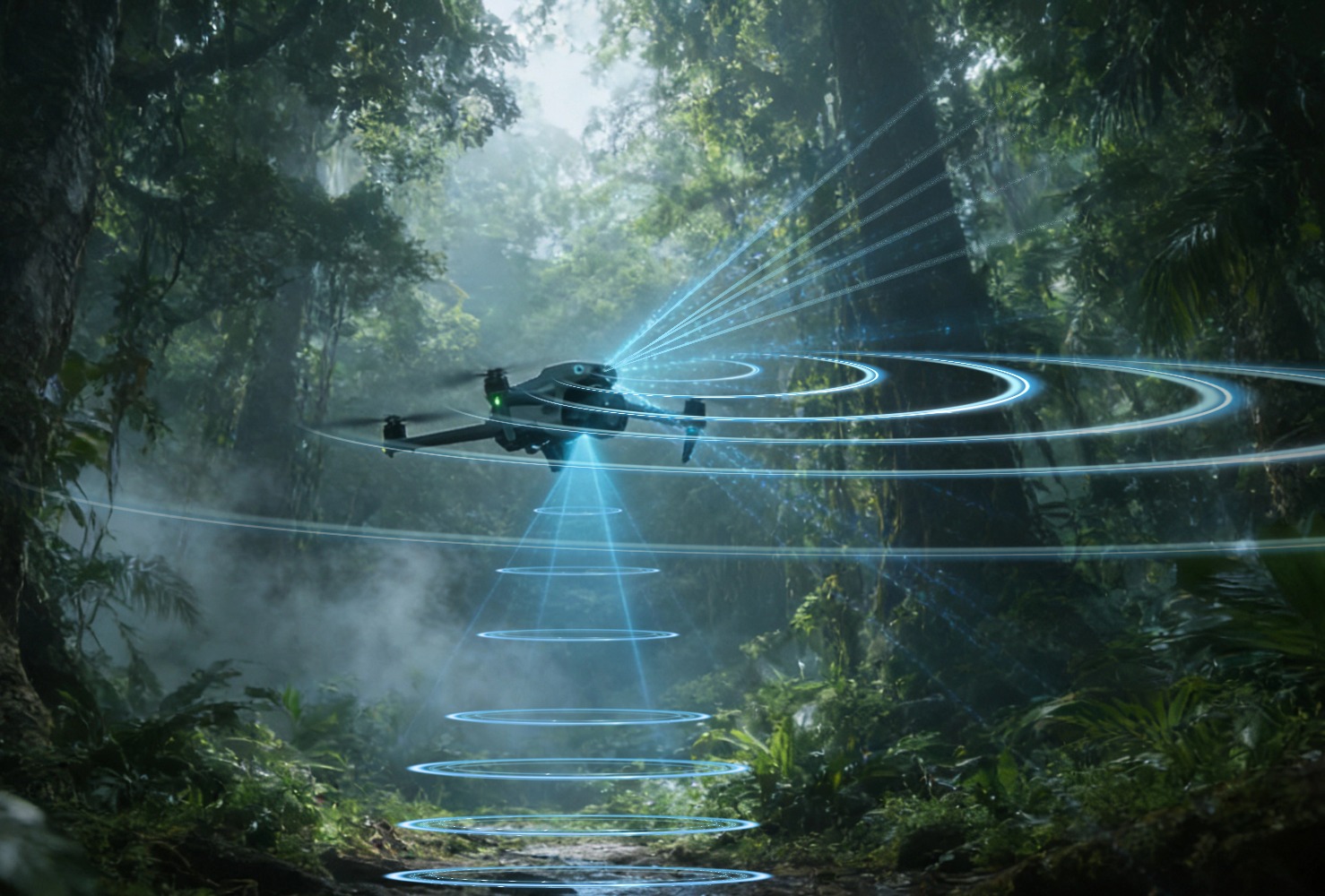
Core Vision Microelectronics, a leading dToF chip design company in the industry, announced the launch of its all-new 3D ToF depth sensor—the VI4331—based on single-photon detection technology. Boasting a high resolution of 240×96, this sensor supports a horizontal wide field of view of 120° and a high frame rate of 30fps. It is ideally suited for applications such as indoor mapping (SLAM) and obstacle avoidance in robotic vacuums, motion detection, and security monitoring.
Ben, Chief Architect of Core Vision Microelectronics’ R&D Department, stated:
“As dToF technology gains traction in the consumer electronics sector, we believe the dToF technical route led by SPAD will become the mainstream for 3D depth sensing and machine vision. The VI4331 integrates years of improvements and innovations of Core Vision Microelectronics in the dToF field. Designed to expand the detection range while improving ranging accuracy and supporting histogram functionality, it provides precise depth information for 3D mapping and localization (SLAM) in multi-depth scene environments.”
High Performance & Low Power Consumption: The Next-Generation VI4331 Features Comprehensive Upgrades
The VI4331 adopts a specialized chip structure design coupled with optimized matching algorithms, achieving significant performance improvements over its predecessor, the VI4330. In particular, it has made breakthroughs in detection distance and ranging accuracy, perfectly addressing pain points such as robot navigation and obstacle avoidance.
By integrating an on-chip power management module, high-performance TDC, and high-speed DSP computing module, the VI4331 is capable of generating 23K depth point cloud data.
It incorporates Core Vision Microelectronics’ proprietary Gen2 DSP depth signal processing module, enabling the output of depth point cloud information with sub-millimeter precision.
With exceptional sunlight resistance, it can achieve a maximum detection distance of up to 12 meters in typical application scenarios.
More Performance Upgrades
The VI4331 is equipped with a high-speed MIPI interface, supporting the output of depth image information at 30fps. Meanwhile, its full histogram output function caters to customers’ diverse scenario application needs.
The photosensitive array of the VI4331 supports one-dimensional unidirectional scanning. The chip is integrated with 4 sets of laser driving signals, each corresponding to the laser driving signal for 1/4 of the image array. The laser driving signals can be synchronized with the internal sensor scanning time, and when paired with addressable lasers, it can perfectly implement a solid-state scanning solution.
Equipped with a high-speed MIPI interface and robust full histogram output performance, it meets diverse scenario requirements of customers.
The VI4331 achieves a compact form factor, wide field of view, and high cost-effectiveness, providing customers with a high-performance, low-power-consumption solution.
With the gradual advancement of disruptive technologies such as machine vision and autonomous driving, an increasing number of applications leveraging 3D cameras for object recognition, motion detection, and scene modeling have emerged. Advanced 3D camera technology enables robots to “see” the surrounding world—quite literally, 3D cameras serve as the eyes of terminals and robots.
Core Vision Microelectronics, a leading dToF chip design company in the industry, announced the launch of its all-new 3D ToF depth sensor—the VI4331—based on single-photon detection technology. Boasting a high resolution of 240×96, this sensor supports a horizontal wide field of view of 120° and a high frame rate of 30fps. It is ideally suited for applications such as indoor mapping (SLAM) and obstacle avoidance in robotic vacuums, motion detection, and security monitoring.
Ben, Chief Architect of Core Vision Microelectronics’ R&D Department, stated:
“As dToF technology gains traction in the consumer electronics sector, we believe the dToF technical route led by SPAD will become the mainstream for 3D depth sensing and machine vision. The VI4331 integrates years of improvements and innovations of Core Vision Microelectronics in the dToF field. Designed to expand the detection range while improving ranging accuracy and supporting histogram functionality, it provides precise depth information for 3D mapping and localization (SLAM) in multi-depth scene environments.”
High Performance & Low Power Consumption: The Next-Generation VI4331 Features Comprehensive Upgrades
The VI4331 adopts a specialized chip structure design coupled with optimized matching algorithms, achieving significant performance improvements over its predecessor, the VI4330. In particular, it has made breakthroughs in detection distance and ranging accuracy, perfectly addressing pain points such as robot navigation and obstacle avoidance.
By integrating an on-chip power management module, high-performance TDC, and high-speed DSP computing module, the VI4331 is capable of generating 23K depth point cloud data.
It incorporates Core Vision Microelectronics’ proprietary Gen2 DSP depth signal processing module, enabling the output of depth point cloud information with sub-millimeter precision.
With exceptional sunlight resistance, it can achieve a maximum detection distance of up to 12 meters in typical application scenarios.
More Performance Upgrades
The VI4331 is equipped with a high-speed MIPI interface, supporting the output of depth image information at 30fps. Meanwhile, its full histogram output function caters to customers’ diverse scenario application needs.
The photosensitive array of the VI4331 supports one-dimensional unidirectional scanning. The chip is integrated with 4 sets of laser driving signals, each corresponding to the laser driving signal for 1/4 of the image array. The laser driving signals can be synchronized with the internal sensor scanning time, and when paired with addressable lasers, it can perfectly implement a solid-state scanning solution.

Application Scenarios
Recently, partner solution providers of Core Vision Microelectronics have leveraged the VI4331 to develop consumer-grade, fully solid-state array 3D dToF LiDAR products. This product integrates navigation and obstacle avoidance functions into one: it can not only output 3D point clouds for navigation and positioning in real time (navigation and positioning frames), with a maximum of 16 scan lines and a detection range of up to 10 meters; but also generate high-quality 3D point clouds for short-range obstacle avoidance (obstacle avoidance and recognition frames) featuring high resolution and wide field of view, with an FOV of up to H120° x V50°.
About Us
Core Vision Microelectronics Technology Co., Ltd. was founded in 2018, with R&D centers in Nanjing and Shanghai, and a marketing center in Shenzhen. A leader in single-photon direct ToF (SPAD ToF) technology and its practical applications, Core Vision Microelectronics is one of the global pioneers in the research of single-photon dToF 3D imaging technology.
With its expertise in chip-level photoelectric conversion device design and single-photon detection imaging technology, Core Vision Microelectronics designs and markets 1D and 3D ToF sensing chips based on single-photon detection. Its products are widely used in various consumer electronics fields such as robotic vacuums, drones, smartphones, smart glasses and smart home devices, as well as in applications like autonomous driving LiDAR systems.